

I’ve learned the hard way that online shopping isn’t as simple as it seems. Skipping product reviews and not checking seller ratings often leads to regrettable purchases and wasted money.
Hidden shipping costs and sketchy return policies catch many of us off guard. It’s worth reading the fine print before hitting that checkout button.
Impulse buying during flash sales, especially on unsecured Wi-Fi, puts both your wallet and personal data at risk.
Taking a breath before purchasing usually saves headaches later.
Skip Reading Product Reviews
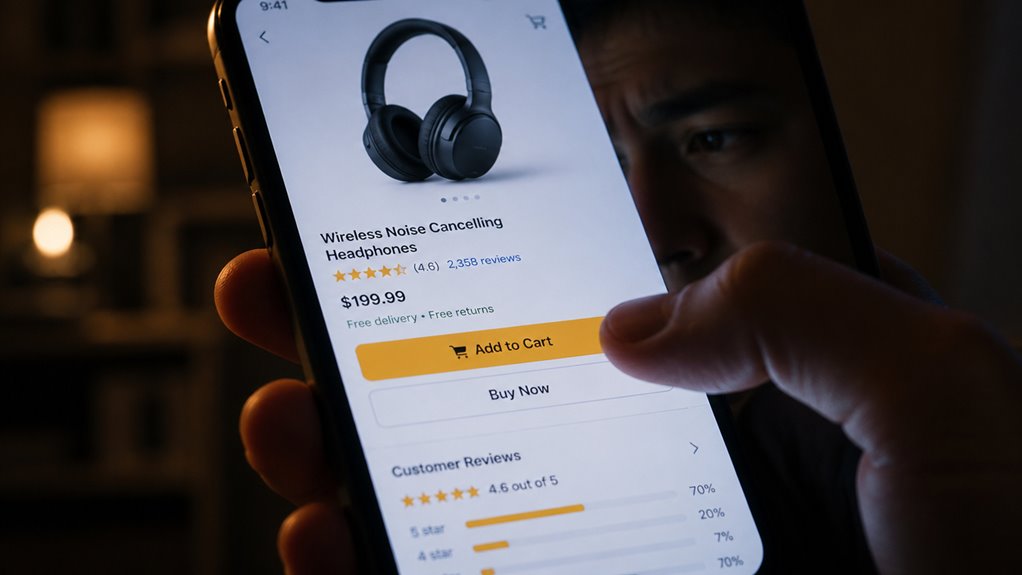
One critical mistake occurs when shoppers bypass product reviews before making purchases. Reviews provide valuable information about quality, durability, and actual performance that product descriptions may not include. Shoppers who skip this step risk buying items that don’t meet expectations or contain defects.
Reading reviews helps identify common problems. For example, a highly-rated laptop might have consistent complaints about overheating, or a kitchen appliance could frequently fail after six months. These patterns become visible when examining multiple customer experiences.
Reviews also reveal sizing issues, color accuracy, and shipping problems. A shirt listed as “medium” might run small, or packaging could arrive damaged. Checking reviews takes minutes and prevents costly returns, wasted time, and buyer disappointment.
Browse Unfamiliar Sellers Without Vetting Them
Purchasing from unknown sellers presents considerable risks that many online shoppers overlook. Unfamiliar vendors may lack established credibility, customer service standards, or secure payment protections.
Before completing a purchase, shoppers should examine seller ratings, return policies, and business registration information. Checking for verified badges on platforms like Amazon or eBay indicates legitimacy. Reading negative feedback reveals patterns of shipping delays, counterfeit products, or unresponsive customer support.
Shoppers should also verify contact information and physical addresses. Legitimate sellers provide clear communication channels and detailed item descriptions. Websites with poor design, numerous spelling errors, or vague policies warrant caution.
Using credit cards rather than debit cards offers additional fraud protection. Avoiding sellers with no review history, suspiciously low prices, or requests for wire transfers reduces financial risk considerably.
Checkout on Public Wi-Fi
While public Wi-Fi networks offer convenience at coffee shops, airports, and libraries, they create significant security vulnerabilities during online shopping transactions. Hackers can intercept data transmitted over unsecured networks, accessing credit card numbers, passwords, and personal information. When customers enter payment details on public Wi-Fi, their information travels unencrypted across the network, making it visible to cybercriminals.
Shopping online at home or on a secure mobile data connection protects sensitive financial information. If public Wi-Fi use is unavoidable, customers should wait until reaching a secure network before completing purchases.
Virtual private networks, or VPNs, encrypt data but require setup beforehand. Financial transactions demand the highest security standards available.
Chase Every Flash Sale and Hype
Because retailers use urgency tactics to drive purchases, customers often make unplanned buying decisions during flash sales and trending events. Limited-time offers create pressure to buy items without proper consideration of actual need or budget.
Shoppers frequently purchase products simply because they are discounted or promoted, not because they require them. A 50-percent-off sale on winter coats in July, for example, may seem like a good deal but wastes money on unnecessary items.
Chasing trends similarly leads to impulse purchases. Popular items like the latest smartphone model or trending fashion pieces often disappear from wishlists after the hype fades.
Customers should establish a shopping list before sales events, comparing prices across multiple retailers, and waiting at least 24 hours before completing purchases to confirm actual necessity.
Ignore Coupon Codes and Hidden Discounts
Many online shoppers overlook available discounts that could reduce their final bill, moving past savings opportunities without investigation. Retailers frequently offer coupon codes through email newsletters, social media, and coupon websites like RetailMeNot or Honey. These codes provide percentage discounts, dollar amounts off, or free shipping on purchases.
Additionally, many stores hide seasonal promotions, loyalty program benefits, or clearance sections that shoppers miss during checkout. Customers often pay full price when alternative payment methods exist. Checking for available discounts before completing purchases takes minimal time but yields meaningful savings.
Examining product pages carefully, reviewing terms and conditions, and comparing prices across retailers guarantees shoppers capture legitimate offers. This practice transforms casual browsing into informed purchasing decisions.
Overlook the Actual Shipping Cost
A product’s advertised price often masks the true cost of purchase when shipping fees remain invisible until checkout. Many shoppers focus exclusively on item prices, neglecting to calculate total expenses including delivery charges.
Shipping costs vary considerably based on several factors: order weight, destination location, delivery speed selected, and retailer policies. A $15 item might cost $8 to ship, effectively doubling the total purchase price. Express shipping options increase expenses considerably compared to standard delivery.
Smart shoppers review shipping policies before adding items to their cart. Some retailers offer free shipping thresholds, requiring minimum purchase amounts. Others charge flat rates regardless of order size. Comparing total costs across different sellers, rather than just product prices, prevents unexpected expense surprises at payment completion.
Miss the Return Policy Fine Print
How often do shoppers examine return policies before completing a purchase? Many customers skip this step, only to discover problems later. Return policies vary greatly across retailers, affecting whether items can be sent back for refunds or exchanges.
Common restrictions include time limits, condition requirements, and restocking fees. Some stores allow returns within thirty days, while others permit only fourteen. Items marked final sale cannot be returned under any circumstances.
Clothing must sometimes have tags attached, and electronics require original packaging. Shoppers should check specific policies for each retailer before buying. Websites typically list these details in footer sections or help pages.
Understanding return conditions prevents frustration when purchases disappoint. Ignoring fine print leads to non-refundable purchases and wasted money.
Assume All Prices Are the Same
Online shoppers often believe identical products carry identical prices across different retailers, yet this assumption frequently costs them money. Price variations occur due to shipping costs, seller markups, bulk discounts, and promotional sales that differ by retailer. A smartphone listed at one store may cost considerably less at another, even when new and from authorized sellers.
Shoppers should compare prices across multiple websites before purchasing. Amazon, Best Buy, Walmart, and Target often display different pricing for the same items. Some retailers offer free shipping, while others charge fees that inflate final costs. Sales tax also varies by location and seller.
Checking price comparison tools and reading product descriptions thoroughly helps identify the lowest actual cost, including all associated fees and shipping expenses.
Get Caught by Expired Digital Deals
Digital promotions and discount codes expire quickly, leaving shoppers disappointed when they attempt to apply outdated offers at checkout. Many retailers set expiration dates on coupon codes, seasonal sales, and flash deals without prominently displaying the deadline information.
Shoppers should check expiration dates before adding items to their cart, as expired codes will not process during payment. Common retailers like Amazon, Target, and Walmart frequently rotate their promotions weekly or even daily.
Codes found on deal websites or through email newsletters often have limited timeframes, sometimes just 24 to 48 hours. To avoid this mistake, shoppers should verify the validity date of any discount before proceeding with purchase. Reading the fine print carefully prevents wasted time and checkout frustration.
Frequently Asked Questions
How Can I Verify That an Online Retailer Is Legitimate Before Making a Purchase?
One can verify an online retailer’s legitimacy by checking for secure website encryption (HTTPS), reading customer reviews on independent sites, confirming physical address and contact information, examining return policies, and verifying business registration with relevant authorities.
What Personal Information Should I Never Share During Online Checkout?
Shoppers should never provide their Social Security number, driver’s license number, or full banking details during online checkout. Most retailers only require name, address, email, and payment card information. One should avoid sharing passwords or security question answers.
How Do I Know if a Product Price Will Drop Again Soon?
While no method guarantees future price reductions, one can monitor historical pricing data through tools like CamelCamelCamel or Keepa, observe seasonal sale patterns, and set price alerts to identify trends before making purchases.
What Should I Do if an Item Arrives Damaged or Defective?
If an item arrives damaged or defective, one should document the condition with photographs, contact the seller or retailer promptly, and request a replacement or refund. Most reputable online retailers offer return policies covering such situations within specific timeframes.
Can I Negotiate Prices or Get Better Deals by Contacting Sellers Directly?
Buyers can contact sellers directly to inquire about discounts, especially on bulk purchases or clearance items. Many sellers offer better deals through direct communication, though success varies by platform policies and product availability.
Conclusion
Online shoppers face a minefield of preventable errors that drain wallets and waste time. Skipping reviews, trusting unknown sellers, using public Wi-Fi, and ignoring return policies transform casual shopping into financial disasters. Flash sales seduce buyers into unnecessary purchases, while expired coupon codes and hidden shipping fees multiply expenses exponentially. Price variations across retailers, overlooked details, and security oversights compound these mistakes, making careful attention to each transaction essential for protecting both money and personal data.