
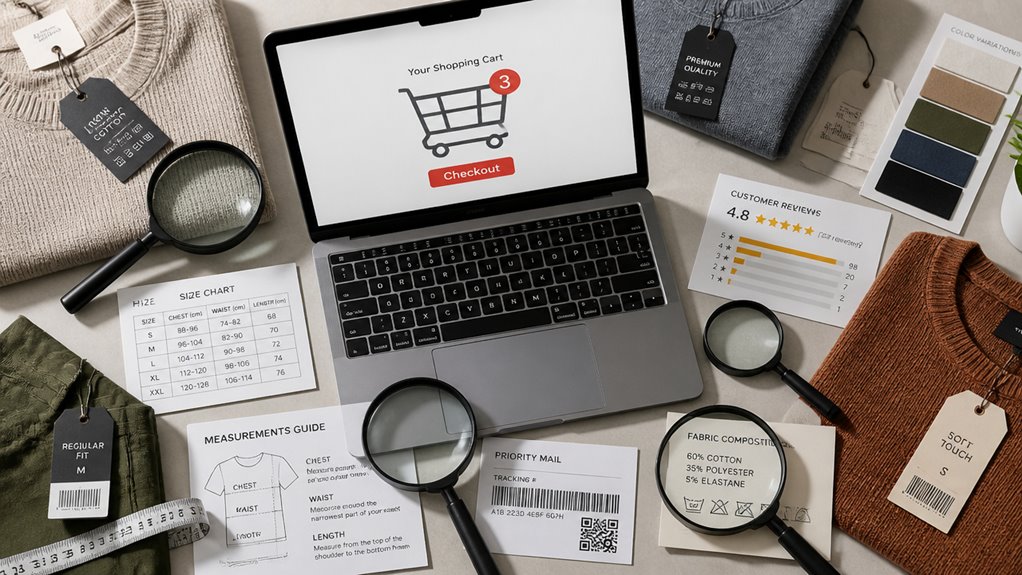
Online shopping trips me up constantly. I’ve ordered items only to discover hidden fees at checkout or realized the dimensions were way off for my space.
Seller ratings? I used to skip those entirely.
The real headaches come later. Return policies vary wildly between sellers, and warranty details hide in fine print I never bothered reading.
Payment security concerns me, yet I rarely verify it beforehand.
Stock images versus real customer photos make huge differences in my purchases.
Import duties occasionally surprise me too. These details pile up fast, turning quick shopping into time-consuming research.
Check the Seller’s Track Record and Ratings

Before purchasing from an online seller, buyers should examine the seller’s history, reviews, and rating scores across the platform. A seller with hundreds of positive ratings and minimal complaints demonstrates reliability. Buyers should read recent reviews, paying attention to comments about shipping speed, product condition, and customer service responsiveness.
Low ratings for communication or delivery are red flags. Platforms like Amazon, eBay, and Etsy display seller percentages and feedback counts prominently. A rating below 95% warrants caution. Buyers should note if negative reviews mention specific issues: damaged items, counterfeit products, or unresponsive support.
Checking the seller’s return policy alongside their ratings provides additional confidence. New sellers with limited history pose higher risks than established vendors with years of positive transaction records.
Read Real Customer Reviews (Not Just Star Counts)
Why do star ratings alone provide incomplete information about product quality and seller performance?
Star counts mask important details that written reviews reveal. A product with five stars might have dozens of complaints about durability, sizing, or shipping times buried in the comments section. Conversely, a four-star item could have minor issues affecting only specific customers.
Real customer reviews contain specifics: whether a jacket runs small, if packaging arrived damaged, or how long delivery actually took. Shoppers should read recent reviews, particularly one and two-star ratings, to identify patterns. Verified purchase badges indicate genuine customers.
Look for reviews mentioning similar needs or concerns as your own. Generic praise like “great product” offers less value than detailed accounts of actual usage and outcomes.
Spot Stock Images vs. Photos From Actual Buyers
How can shoppers distinguish between polished marketing images and genuine product photos? Stock images typically feature perfect lighting, pristine conditions, and professional models or props. Actual buyer photos show real-world usage, imperfections, varied angles, and authentic settings. Look for multiple angles, close-ups of texture, and images taken in natural environments rather than studios.
Genuine customer photos often display products worn, used, or displayed in homes. These reveal true colors under different lighting, fit on actual bodies, and realistic sizing. Stock photos appear overly smooth, uniform, and professionally staged.
Buyers should prioritize listings with numerous customer-submitted images over those showing only sleek promotional shots. This practice provides clearer expectations about product quality, appearance, and performance before purchase completion.
Measure Before You Buy: Why Dimensions Actually Matter
While authentic customer photos reveal how products look in real conditions, actual measurements reveal how products fit into real spaces. Many shoppers skip dimension details, then receive items that do not work in their homes. A couch listed as 84 inches wide may not fit through a doorway or against a bedroom wall. Similarly, a desk measuring 48 inches deep requires adequate floor space that buyers often misjudge.
Product listings typically include height, width, and depth. Shoppers should compare these numbers against their own spaces before purchasing. Measuring doorways, hallways, and furniture placement areas prevents costly returns.
Online retailers sometimes omit measurements entirely, making phone calls to customer service necessary. Checking dimensions before checkout eliminates surprises and guarantees items function properly in their intended locations.
Understand Fabric, Materials, and Quality Clues
Product descriptions often list fabric content and material composition, yet many shoppers overlook these details entirely. Understanding these elements prevents purchasing disappointment.
Natural fibers like cotton, wool, and linen typically offer breathability and durability, though they may wrinkle or shrink. Synthetic materials such as polyester provide wrinkle resistance and affordability, but can trap heat. Blended fabrics combine benefits of both types.
Quality indicators appear in specific language. Terms like “heavyweight” or “high thread count” suggest durability. Conversely, “lightweight” or “thin” material may wear quickly.
Weight measurements matter considerably. A garment listed at 200 grams versus 100 grams indicates substantial difference in thickness and longevity. Care instructions reveal maintenance demands, offering clues about material fragility or resilience.
Shoppers who examine these descriptions make informed choices and reduce returns.
Check Expiration Dates and Freshness Guarantees
Beyond apparel and durable goods, perishable items require different evaluation standards when shopping online. Shoppers frequently overlook expiration dates, best-by dates, and freshness guarantees when purchasing food, beverages, and beauty products online.
Retailers should clearly display manufacturing dates, expiration dates, and shelf-life information on product pages. Customers benefit from checking these details before completing purchases. Some sellers offer freshness guarantees, promising refunds or replacements if items arrive expired or compromised.
Perishable categories warrant particular attention: dairy products, supplements, skincare items, and medications. Temperature control during shipping matters considerably for these goods. Online shoppers should verify that sellers use appropriate packaging and refrigerated shipping methods when necessary.
Requesting items with the furthest expiration dates available protects against quick spoilage at home.
Don’t Get Blindsided by Shipping Fees
Many online shoppers encounter unexpected charges at checkout when shipping costs appear for the first time. Retailers often advertise low product prices, then reveal substantial delivery fees during the final purchase step. Shoppers should review shipping rates before adding items to their cart.
Common shipping variables include order size, destination location, and delivery speed. A package sent across the country costs more than local delivery. Express options, like two-day shipping, carry higher fees than standard five-to-seven-day services.
Some retailers offer free shipping thresholds, requiring minimum purchase amounts, typically between $25 and $50. Others provide free shipping for account members or during promotional periods. Comparing total costs across multiple sites, including all fees and taxes, helps shoppers identify genuine deals and avoid overpaying for convenience.
Watch Out for Hidden Fees and Surprise Charges
While shipping costs represent one category of unexpected charges, online retailers frequently impose additional fees that emerge during checkout. Processing fees, handling charges, and service surcharges can substantially increase the final purchase price. Some retailers add payment method fees, particularly when customers use credit cards or digital wallets.
Gift wrapping, expedited processing, and insurance options present additional costs that shoppers may not anticipate. International purchases often incur currency conversion fees, import duties, and customs charges. Retailers sometimes charge restocking fees for returns or account maintenance fees for certain services.
To avoid surprises, shoppers should review all line items before completing transactions, read terms and conditions carefully, and compare total costs across multiple retailers. Checking the final price breakdown prevents unexpected financial disappointments at purchase completion.
Know What You’re Importing: Import Duties Explained
Import duties represent mandatory taxes imposed by governments on goods crossing international borders, and they directly affect the final cost of online purchases from foreign retailers. These taxes vary considerably by country, product type, and origin location. A shirt from Vietnam might incur different duty rates than one from Canada, depending on trade agreements and classification codes.
Shoppers ordering from overseas should research their country’s duty thresholds before checkout. Many nations exempt purchases below certain values, such as $800 in the United States or €150 in the European Union.
Items like electronics, jewelry, and cosmetics typically face higher duty percentages than clothing or books. Understanding these costs prevents billing surprises upon delivery, as customs officials assess duties before packages reach recipients.
Confirm Your Payment Info Is Secure
Beyond calculating import costs, shoppers must verify that their payment information remains protected during online transactions. Secure websites display “https” in the address bar, indicating encrypted connections that safeguard sensitive data. Shoppers should check for padlock icons, which signal security protocols are active.
Payment methods vary in protection levels. Credit cards offer fraud liability protection, while debit cards provide limited coverage. Digital wallets like PayPal add intermediary security between buyers and merchants.
Before completing purchases, shoppers should review website privacy policies, return and refund procedures, company contact information, and third-party payment processor details.
Avoiding unfamiliar payment requests, such as wire transfers or cryptocurrency, reduces fraud risk considerably. Legitimate retailers accept conventional payment methods and maintain transparent policies regarding data handling and customer protection.
Understand the Return and Refund Policy
Return and Refund Policy
Return and refund policies vary greatly among online retailers, making it essential for shoppers to review these terms before completing a purchase. Some retailers offer thirty-day returns, while others limit returns to fourteen days or less. Certain items, such as electronics or clearance merchandise, may have restricted return windows or no return option at all.
Shoppers should check whether restocking fees apply, as some companies deduct a percentage from refunds for returned items. Understanding shipping costs for returns matters greatly, since some retailers cover return postage while others require customers to pay. Refund timelines also differ, ranging from five to thirty business days after the company receives returned merchandise. Reviewing these policies prevents disappointment and unexpected costs after purchase.
Verify Warranty Coverage (And What It Actually Covers)
Verify Warranty Coverage (And What It Actually Covers)
While many shoppers assume a warranty protects their purchase completely, the reality involves specific limitations and exclusions that vary by product and manufacturer. A one-year electronics warranty typically covers manufacturing defects, but excludes accidental damage, water damage, and normal wear.
Clothing warranties rarely exist, while appliances like refrigerators often come with limited coverage on specific parts. Shoppers should locate the warranty document before purchasing, checking what damage qualifies for coverage. Many warranties require proof of purchase and original packaging.
Extended warranties, offered at checkout, add extra cost but may cover accidents that standard warranties don’t. Understanding these distinctions prevents expensive surprises when products fail outside covered conditions.
Frequently Asked Questions
How Can I Verify if a Website Uses HTTPS Encryption for Secure Transactions?
One can verify HTTPS encryption by examining the website’s URL bar. A padlock icon appears next to the address, and the URL begins with “https://” rather than “http://”. This indicates the site uses secure encryption for transactions.
What Should I Do if a Product Arrives Damaged or Significantly Different From Listing?
How many shoppers know their rights? One should immediately contact the seller with photographic evidence, request a refund or replacement, and document all communication. If unresolved, file a dispute through the payment platform or chargeback with their bank.
Are There Red Flags in Product Descriptions That Indicate Lower Quality Items?
Vague specifications, excessive use of stock photos, missing dimensions or materials, and overly generic language suggest lower quality. Sellers should provide detailed measurements, authentic images, and honest material composition to establish credibility.
How Do I Check if a Seller Requires Payment Through Untraceable Methods?
Like a detective examining evidence, shoppers should review checkout pages carefully. Look for payment options lacking buyer protection—wire transfers, cryptocurrency, gift cards, or money orders. Legitimate sellers offer credit cards, PayPal, or established payment platforms with dispute resolution.
What’s the Best Way to Compare Prices Across Multiple Online Retailers Safely?
Shoppers should use price comparison websites like Google Shopping, PriceGrabber, or CamelCamelCamel for transparent tracking. They verify seller credentials through independent review sites, check return policies, and compare total costs including shipping before purchasing from reputable retailers.
Conclusion
Online shopping requires attention to seller ratings, customer reviews, product dimensions, materials, import duties, payment security, return policies, and warranty details. While checking every element seems time-consuming, these steps actually save money and frustration. Overlooking one factor often costs more through returns, fees, or damaged items. Spending five minutes reviewing these aspects prevents expensive mistakes, making the effort worthwhile for most purchases.